Now on view

Metaconceptual Art

Metaconceptual Art studies art as a system: artwork, institution, market, archive, viewer, and meaning folded into one living form.

The artwork is not only the object. It is the condition that permits the object to be seen. It is the institution that frames it, the market that prices it, the archive that remembers it, and the viewer who activates it.
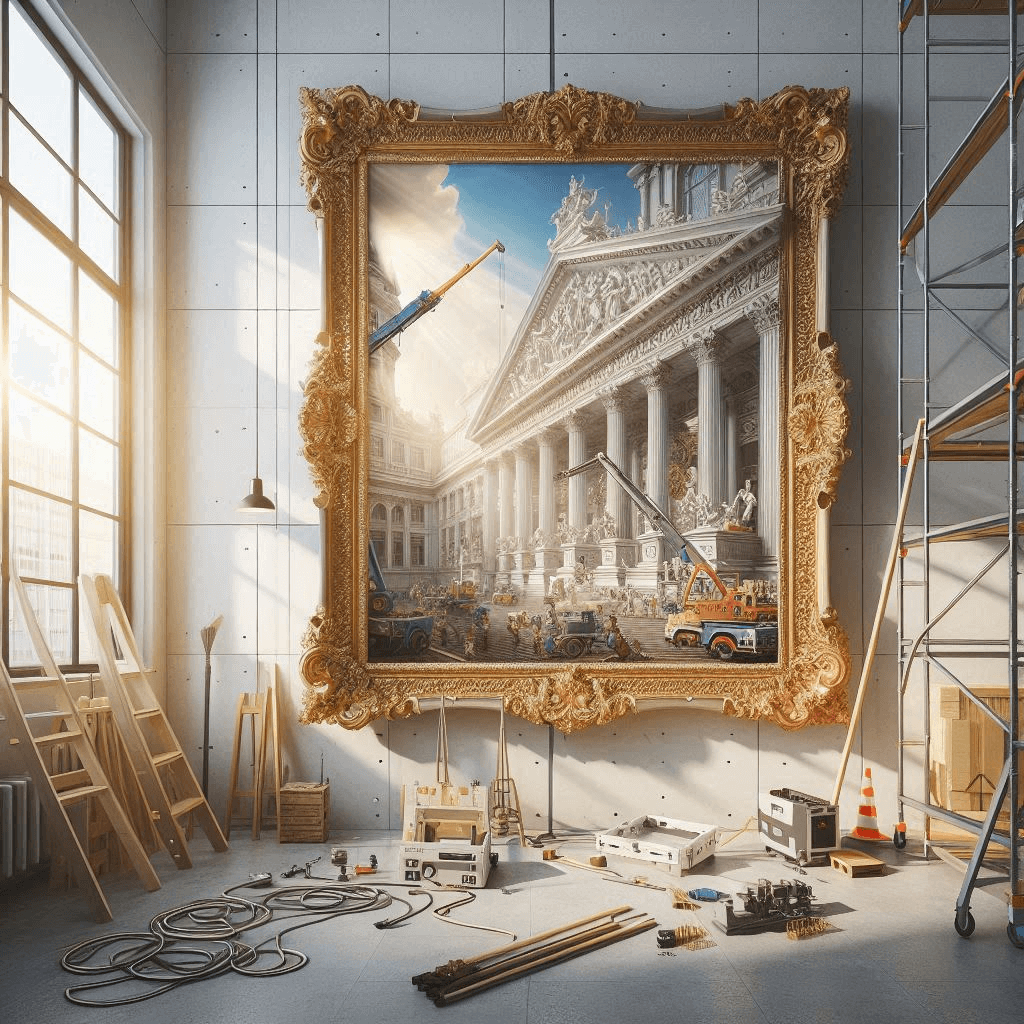
An ornate gold frame surrounding a classical museum facade under construction.
Visual anchor Construction of the Museum as Concept Image study, 2026

After Sol LeWitt

Eight Sentences On Metaconceptual Art

  1. A returning of the Formless to Form (Art). The work gives shape to what normally remains invisible: systems, permissions, histories, and relations.
  2. An examination of the commodification of Art and its relationship to the current global economic crisis. Art is considered alongside price, scarcity, speculation, labor, and the pressures of global capital.
  3. An examination of the power structures and network of the elite 'Art World' and 'Art Institutions'. The museum, gallery, collector, curator, critic, and platform are treated as part of the artwork's material field.
  4. An Archaeology of the Art World, and Art History. The project excavates how artistic value is inherited, archived, narrated, revised, and canonized.
  5. The interplay of Time and Space. Meaning shifts across exhibition, memory, revision, location, interface, and encounter.
  6. Transcendence of medium to arrive within the collective consciousness. The work can appear as image, text, metadata, page, network, or shared interpretation.
  7. The annihilating of the boundaries between Art World insiders and Outsiders. The site should remain legible to visitors without art-world credentials while preserving theoretical rigor.
  8. The annihilating of the boundaries between Art and Life. The visitor, the page, the edit, the source, and the revision all become part of the work's living conditions.

Linked open data

Built To Be Checked

Most writing about art asks you to take its claims on trust. This site is built to be checked. Every concept and figure in it is pinned to the public records that museums, libraries, and Wikipedia already rely on — Wikidata, and the Getty vocabularies that catalogue the art world. Follow any identifier below and you step out of this page into the shared record of art.

See the full register →